

Shadow Gallery · The Journal
Ten Decor Trends
Egyptian homes · 2026
What is actually going up
on Egyptian walls this year
Walk into any newly finished apartment in Cairo, Giza or on the North Coast and you notice the same thing: bare walls are out. Homeowners are treating a wall the way they treat furniture — as a real decision, not an afterthought.
We print and frame thousands of canvases a year, which gives us a front-row seat to what people are actually hanging. Here are the ten directions we are seeing take over living rooms, bedrooms and offices across Egypt — and the wall art that fits each one.
01 · Islamic calligraphy
Modern calligraphy, reimagined
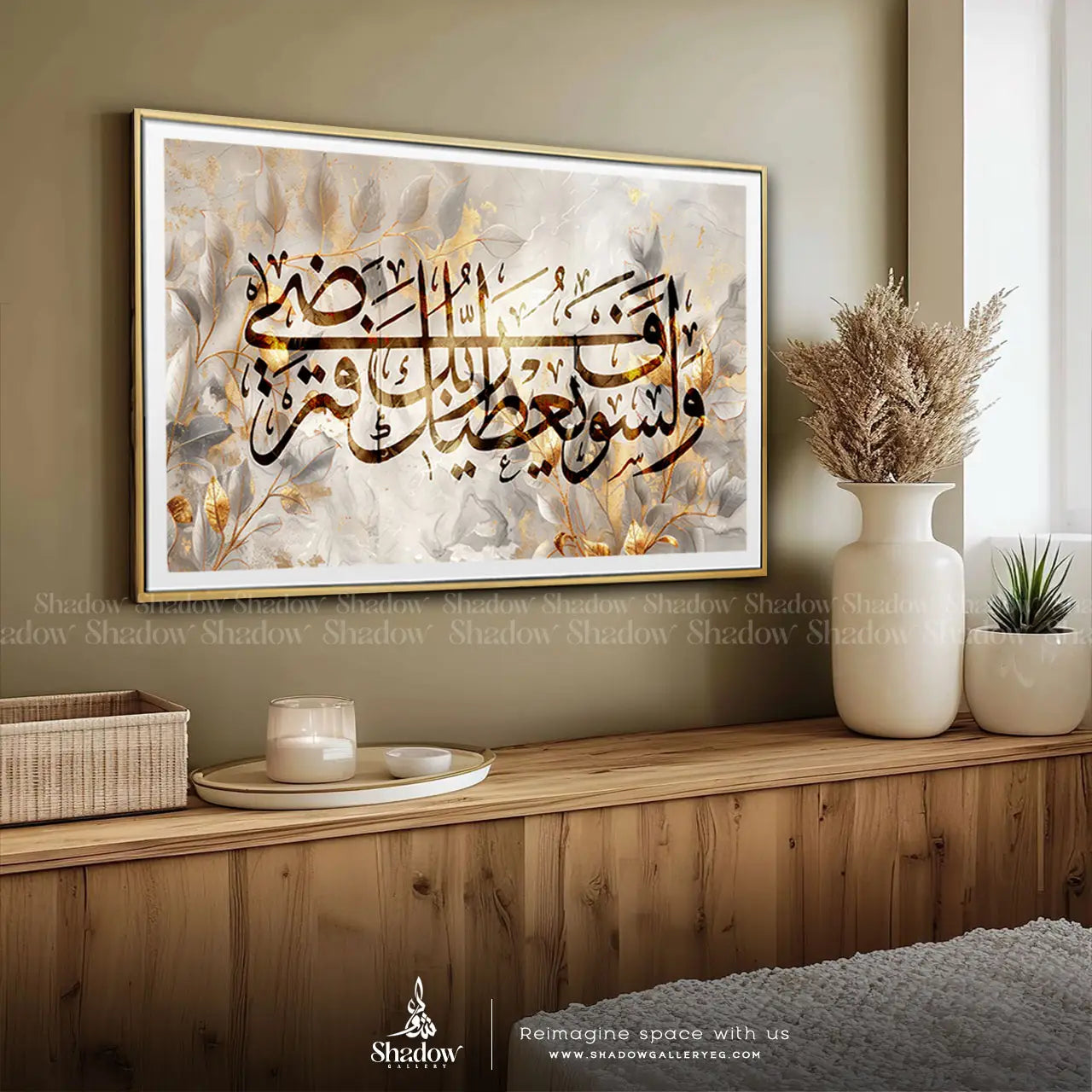
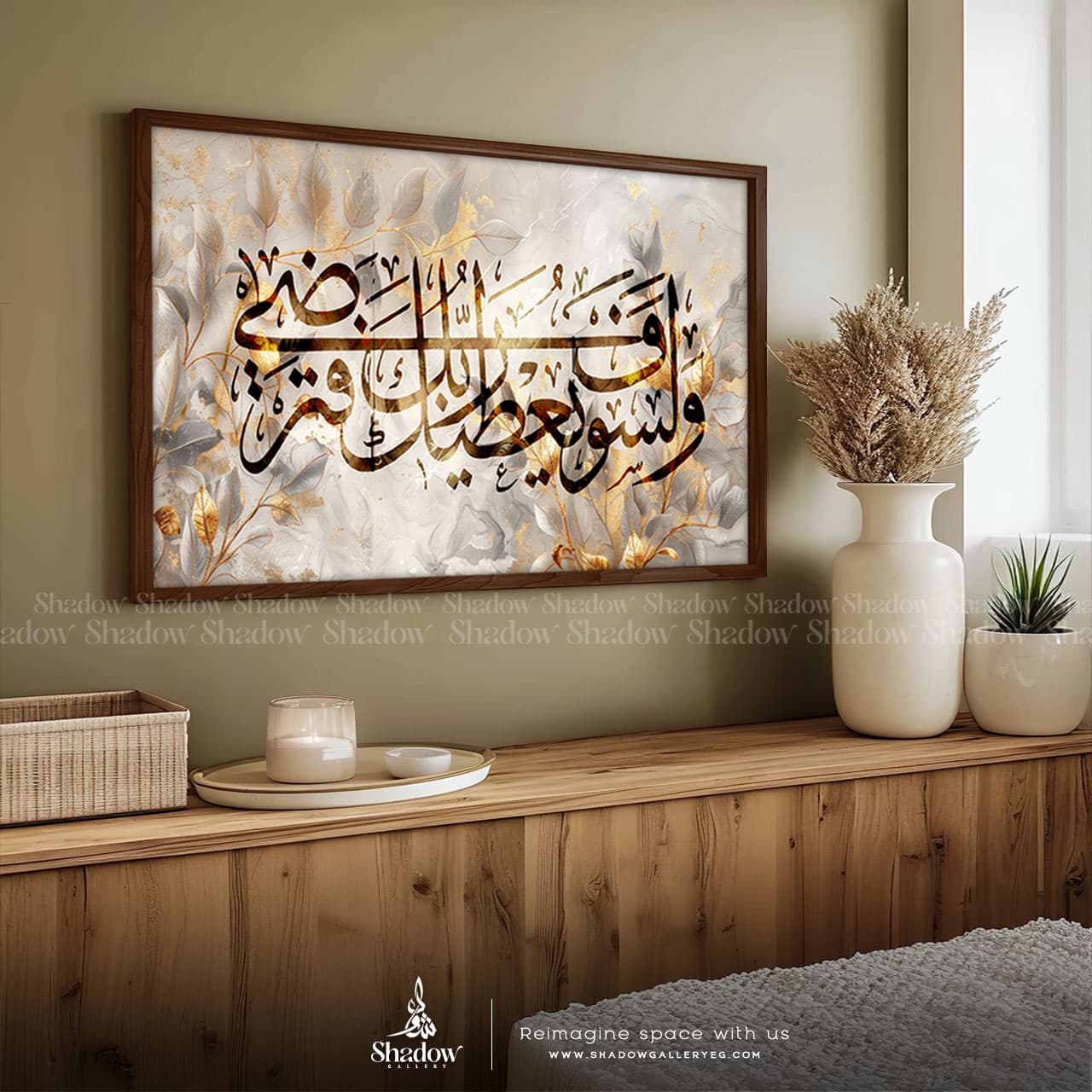
Islamic wall art has always had a place in the Egyptian home, but the 2026 version does not look like your parents' frame. Instead of heavy ornate borders, people are choosing minimalist Ayatul Kursi canvases, muted earth-tone calligraphy and clean Arabic typography on soft neutral grounds. Spiritual, and still at home in an uncluttered living room.
Moving fastest right now: burgundy-and-gold framed calligraphy, and the softer beige and brown textured pieces that work in traditional and contemporary rooms alike.


02 · Triptych sets
Three canvases instead of one
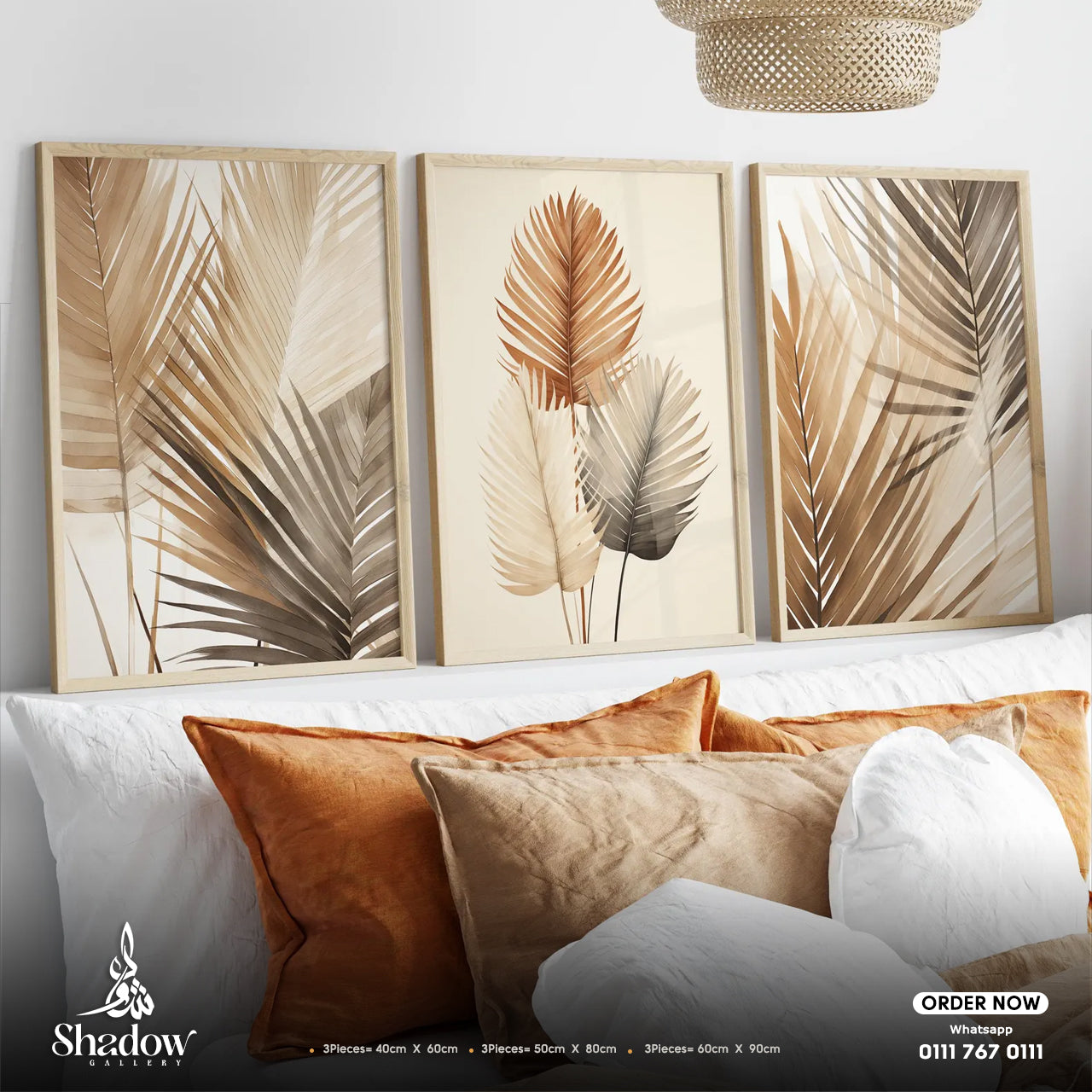
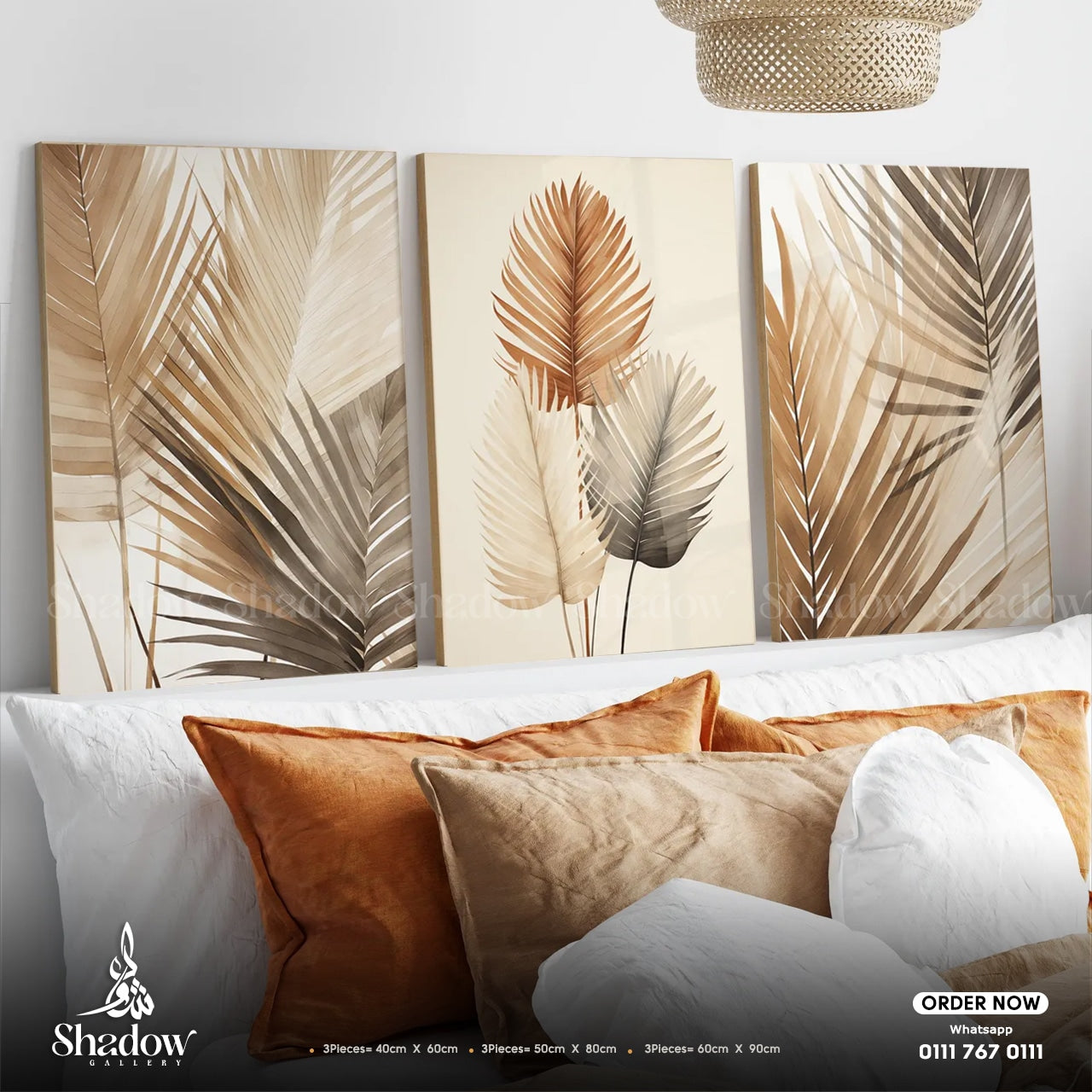
One large canvas is a statement. Three coordinated canvases hung together are an experience — and this is the single biggest shift in how Egyptians decorate this year. A triptych works especially well above a sofa, a dining table or a headboard, because it fills width without one oversized, awkward-to-hang piece.


The proportion rule
A triptych's total width — panels plus the gaps between them — should cover 60–75% of the furniture below it, with an even 8 cm between panels. Three 50×70 panels come to 166 cm, which is right for a 220 cm sofa. The full sizing and hanging guide →
03 · Warm neutrals
Earth tones replace cold grey
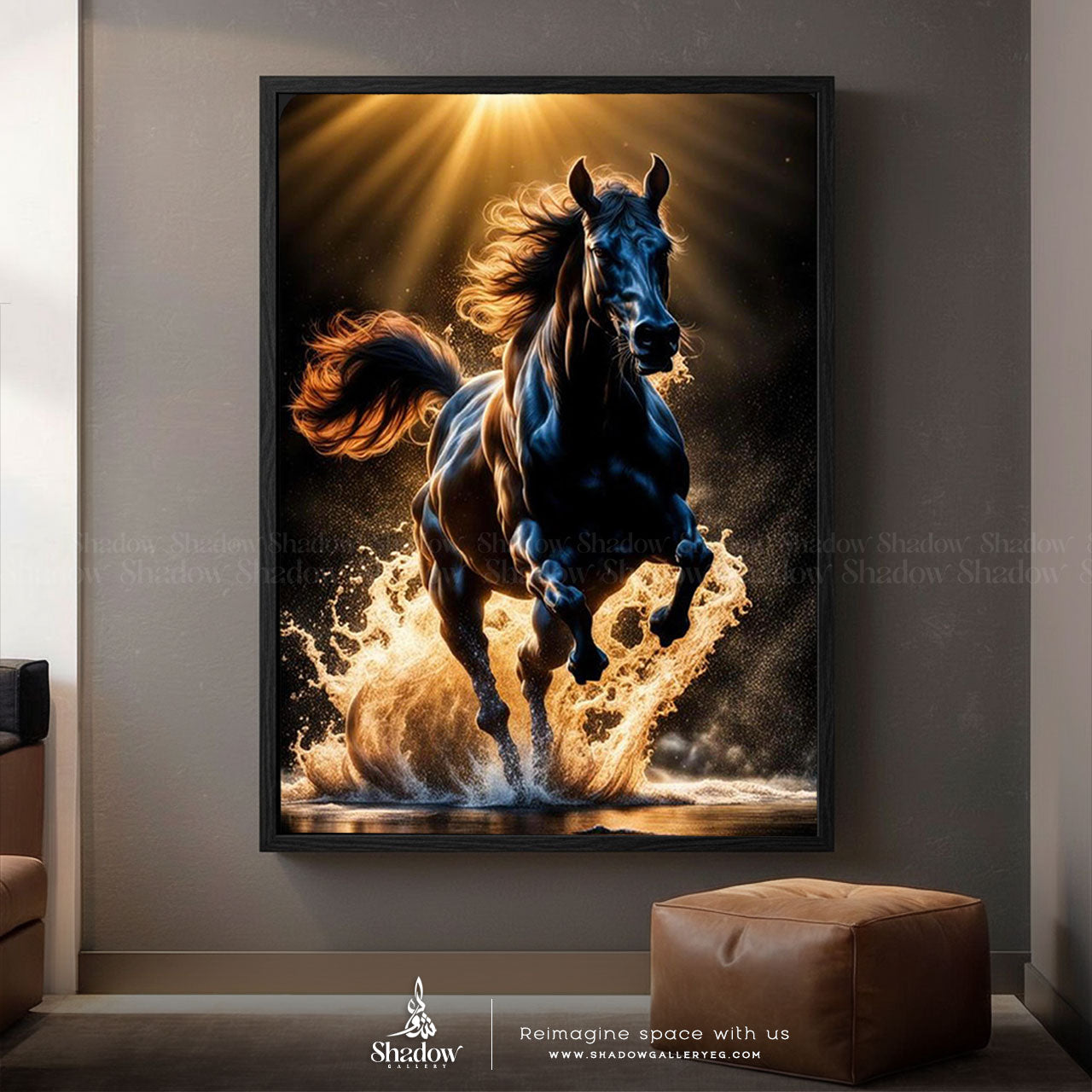
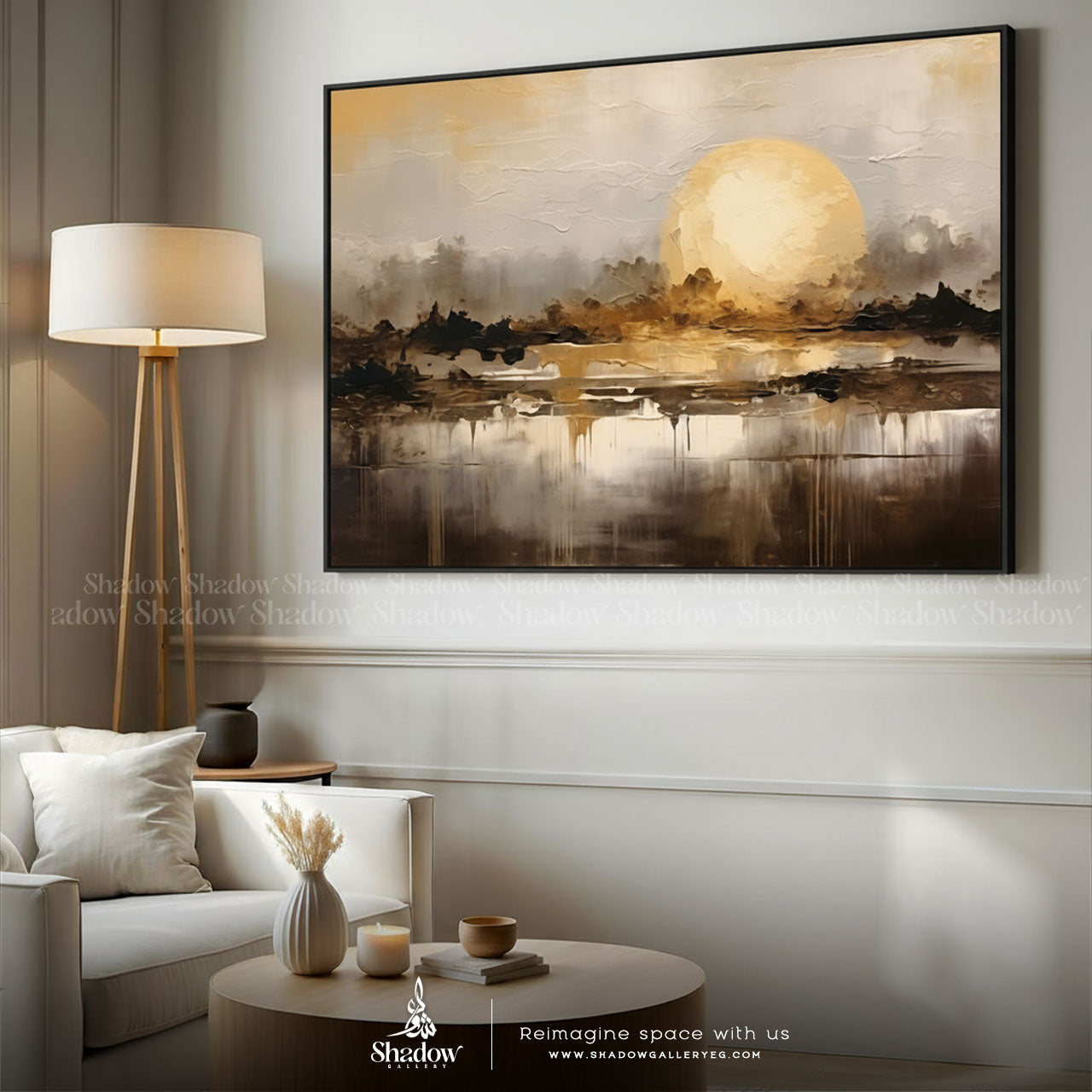
The grey-and-white minimalism of a few years ago is softening into terracotta, ochre, sand and burgundy. You see it most in abstract and botanical work — layered earth-tone geometry or a warm floral set rather than a stark black-and-white print. It also sits better with the warm light most Egyptian flats get.


04 · Texture
Dimensional work, not just flat print
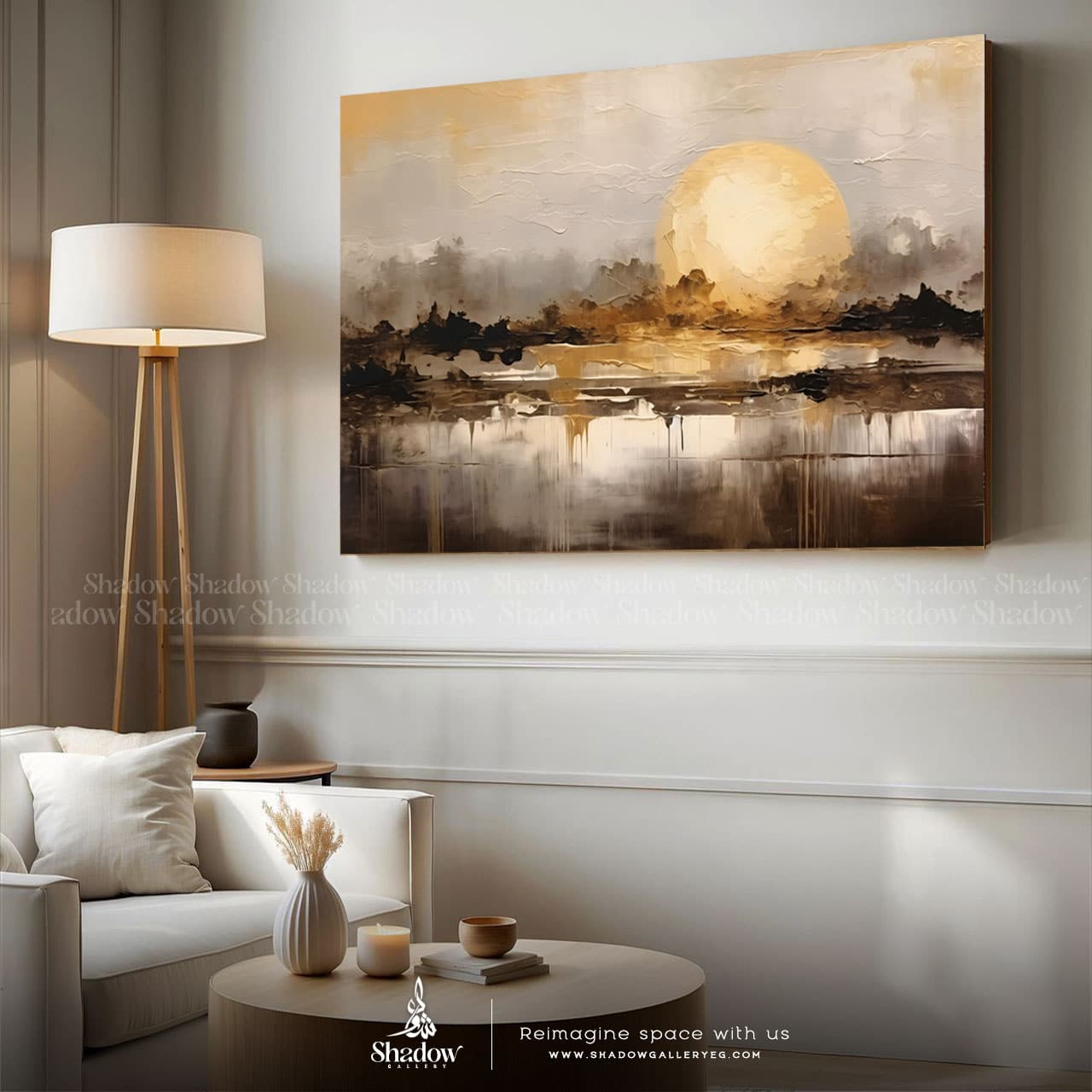
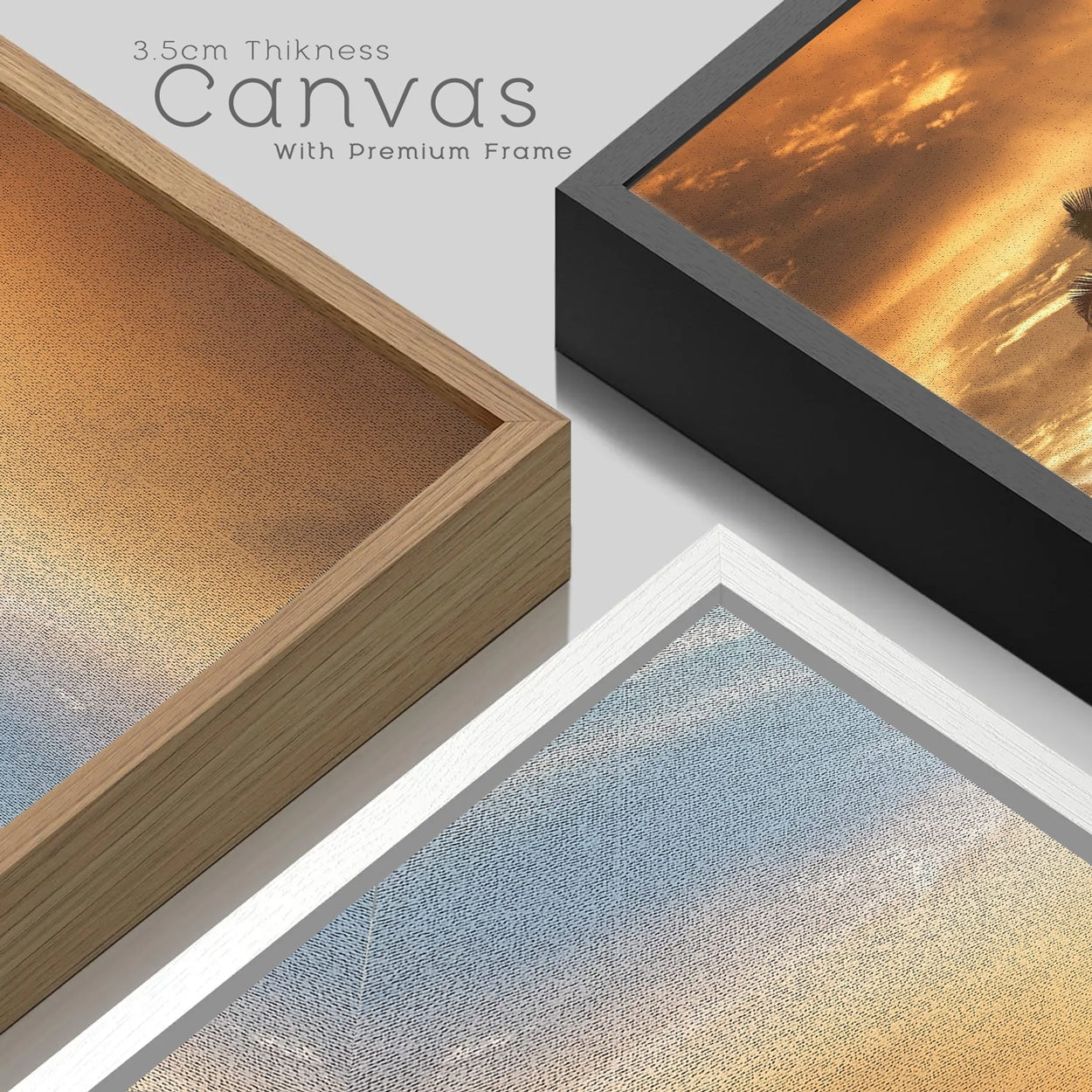
Flat prints now have company: canvases with raised brushwork, relief accents and layered material that catch the light differently through the day. It reads expensive without a renovation — and it photographs beautifully, which matters to anyone decorating with a camera in mind.

05 · Gallery walls
Curated, not scattered
The cluster of mismatched frames is being replaced by the curated gallery wall: two to four frames from the same family — one frame finish, a coordinated palette, varied sizes — arranged on clear alignment rather than spontaneously. It reads as designed instead of accidental.
The rule that does most of the work: one frame finish across the whole group, two at most.


06 · Coastal
Santorini blue, all year round
With Egypt's love of the North Coast and the Red Sea, blue-and-white coastal art — Santorini doorways, Amalfi watercolours, ocean-toned abstracts — has become a favourite for summer houses and for city flats chasing a permanent holiday feeling indoors.


07 · Portraiture
One face as the anchor
Bold minimalist portraiture — flowing silhouettes, Afrocentric portraits, Art Deco faces — is showing up as the single anchor piece in living rooms and entryways. One striking face gives a room a clear focal point in a way busy pattern cannot.


08 · Botanical
Large leaves, not little pots
Bringing nature indoors keeps growing, but the 2026 reading leans to large-leaf botanicals, tropical leaf triptychs and muted floral sets rather than small potted-plant illustrations. Paired with real plants it finishes the biophilic feeling without a jungle of actual greenery.


09 · Japandi
Quiet, on purpose
The Japanese-Scandinavian hybrid — muted tone, negative space, natural material, quiet composition — is gaining ground in bedrooms and home offices. A textured Japandi diptych over a bed or a desk delivers calm without leaving the wall looking empty.


10 · Kids' rooms
Children's walls get real design attention
Parents have stopped defaulting to cartoon decals. Soft-toned animal prints, gentle abstract shapes and playful but design-forward canvases are replacing generic nursery posters — proof that even a child's room is getting a proper decor decision in 2026.


Bring 2026 home
The fastest way to update a room is not new furniture
It is the right piece, in the right size, framed to match the room's woodwork. Send us the width of your sofa or wall and a phone photo, and we will come back with the exact size and layout in centimetres.